

Is a hoodie or sweatshirt better for gym workouts?

A crewneck sweatshirt is better for most indoor gym workouts in 2026 when its fabric and fit match the hoodie: it removes the hood and drawstrings without sacrificing sleeve coverage. Choose a hoodie for a cold commute or a cool warm-up, and switch to a lighter top when either layer becomes hot, damp, or restrictive.
TL;DR- Is a hoodie or sweatshirt better for gym workouts? Choose a crewneck sweatshirt for indoor lifting with comparable fabric.
- A hoodie suits a cold commute; a lighter top suits hard conditioning once you warm up.
- Check shoulder movement, sleeve clearance, and fabric before choosing either gym layer.
- Rage U Athletics targets disciplined athletes; choose athletic apparel around your session, not just your outfit.
Is a hoodie or sweatshirt better for gym workouts?
Choose the crewneck for indoor training. Choose the hoodie when you actually need the hood. This comparison assumes similar fabric, thickness, and fit. A thin hoodie and a thick fleece sweatshirt are not equivalent layers.
Here, sweatshirt means a crewneck without a hood. A hoodie is also a type of sweatshirt, but the distinction matters when you lie on a bench, move overhead, or manage loose fabric around equipment.
| Option | Best for | Practical advantage | Main drawback | Verdict |
|---|---|---|---|---|
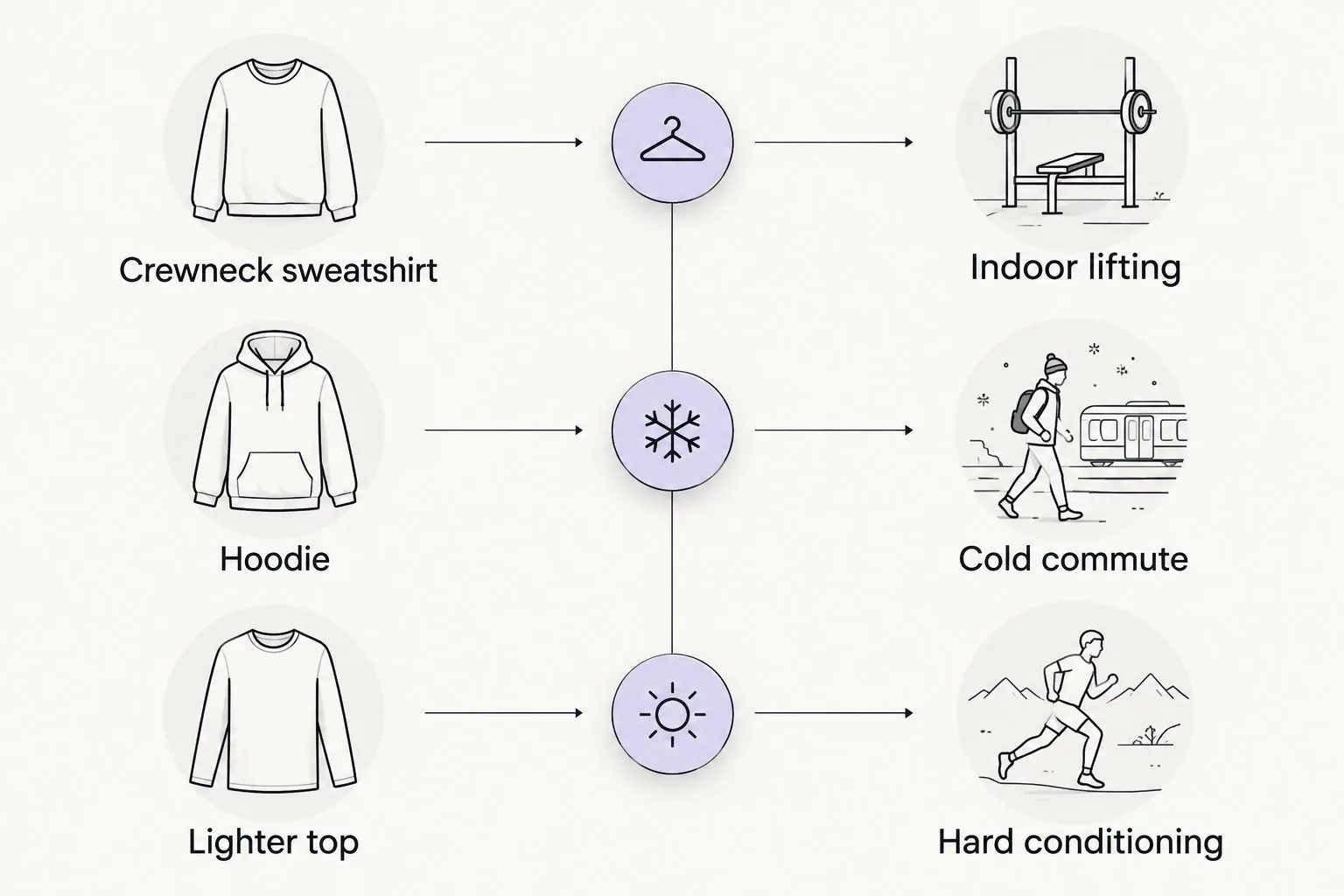
| Crewneck sweatshirt | Indoor lifting in a cool gym | No hood or drawstrings behind your neck | Thick fabric still holds warmth | Better default indoor layer |
| Hoodie | Cold commutes and cool warm-ups | Hood adds coverage before training | Hood and cords need managing | Wear when coverage matters |
| Lighter top | Hard conditioning and warm gyms | Less fabric to manage during effort | Less insulation before and after training | Better once you feel hot |
For the fit question behind this comparison, read whether an oversized hoodie is worth it for the gym. Extra room helps only when it supports movement without leaving fabric in the way.
Why this matters
Your gym outfit has different jobs before, during, and after training. The layer that feels right outside does not automatically belong on your body through every working set. Separate coverage from performance.
For your 2026 training wardrobe, start with the environment and the session. A cool weight room calls for a different decision than a warm room filled with conditioning equipment. Keep the outer layer removable rather than treating it as mandatory.
Streetwear still has a place. A strong silhouette can carry your outfit beyond the gym, but the bar path, bench setup, and range of motion come first during training. Identity does not require working around your clothes.
Crewneck sweatshirt: best for indoor lifting
A crewneck removes a practical complication: there is no hood to arrange behind your head or upper back. That makes it the simpler choice when your session includes bench work, overhead movement, or exercises where fabric near your neck becomes distracting.
The advantage is simplicity, not automatic breathability. A thick crewneck can still feel too warm. A close-fitting one can still pull across your shoulders, and a loose one can still bunch at your waist.
Check the garment in your actual lifting positions. Reach overhead, bring your arms forward, and sit against a bench backrest. The neckline should stay comfortable without requiring you to tug the body into place after each movement.
Best for: athletes lifting indoors who want a warm layer without a hood. The drawback is unchanged insulation: removing the hood does not turn a heavy sweatshirt into a lightweight training shirt.
Do not choose a crewneck solely because the label says athletic. Choose it because the sleeves stay clear, the shoulders move freely, and the fabric feels appropriate for the room.
Hoodie: best for cold commutes and cool warm-ups
A hoodie earns its place when you need head and neck coverage before you train. It also works as a removable layer while you settle into a cool gym. Once you warm up, reassess it.
The hood is useful outside and additional fabric inside. On a bench, arrange it so it does not bunch behind your head or shoulders. Around equipment, secure loose drawstrings and keep them clear of moving parts.
A hoodie is not automatically warmer than every crewneck. Fabric construction, thickness, and fit still matter. Compare those details before crediting the hood with the entire difference.
Best for: athletes moving between a cold commute and an indoor session. Its downside is more material to manage during exercise, especially when the hood has no job left to do.
A zip-front design is easier to open or remove than a pullover. A pullover gives you fewer opening options. Neither construction fixes a poor fit or makes heavy fabric appropriate for every workout.
Lighter top: best for hard conditioning
When effort rises and either sweatshirt feels hot, the better answer is a lighter top. You do not need to force a choice between two outer layers when neither fits the conditions. Remove the layer before it becomes a distraction.
Fabric still matters here. Read the composition and care label rather than assuming every thin shirt handles moisture the same way. Thickness alone does not establish drying speed, stretch, or comfort against damp skin.
Best for: hard conditioning, warm gyms, and sessions where you no longer need insulation. The trade-off is less warmth while standing around or traveling home, so keep a separate dry outer layer available.
Do not use extra clothing as proof of effort. Sweat reflects heat regulation, not a direct score for workout quality. Training decisions should follow your session, not how soaked the garment becomes.
Why the better gym layer varies
Your 2026 gym-layer decision depends on the garment and the conditions, not the name alone. Use these factors to break a close comparison:
- Room conditions: A layer that feels comfortable in a cool gym can feel excessive in a warm one. Check comfort again after you start moving.
- Session demands: Bench work makes hood placement relevant. Conditioning makes unnecessary insulation more noticeable.
- Fabric construction: Brushed fleece, loopback fabric, and thinner jersey do not feel identical. Read the material description and inspect the inside surface.
- Fit through movement: Shoulder restriction, sleeve bunching, and hem movement matter more than the size printed on the label.
- Loose components: Hoods, drawstrings, and excess sleeve fabric add things to manage. Keep them away from equipment.
- The trip outside: A cold journey creates a reason for coverage that an indoor working set does not. Treat those as separate clothing decisions.
Compare like with like. If one garment is substantially thicker, the warmth difference does not establish that hoodies are better or worse as a whole category.
How do you check gym fit before buying?
Make movement part of your 2026 buying checklist. A standing mirror check tells you how the garment looks at rest; it does not tell you how it behaves under an overhead reach or against a bench.
- Check shoulders. Raise your arms and reach forward. Reject a fit that pulls tightly across your upper back or forces you to shorten the movement.
- Check sleeves. Bend your elbows and bring your hands into your usual grip positions. Cuffs should stay clear without constant adjustment.
- Check the hem. Squat and hinge without loading the movement. Watch for fabric that catches, rides up uncomfortably, or gathers where you need clearance.
- Check the hood. Sit against a backrest if possible. Decide whether the hood lies comfortably or needs rearranging every time.
- Check layering. Try the garment over the shirt you actually wear to train. A fit that works on bare skin is not necessarily the fit you need.
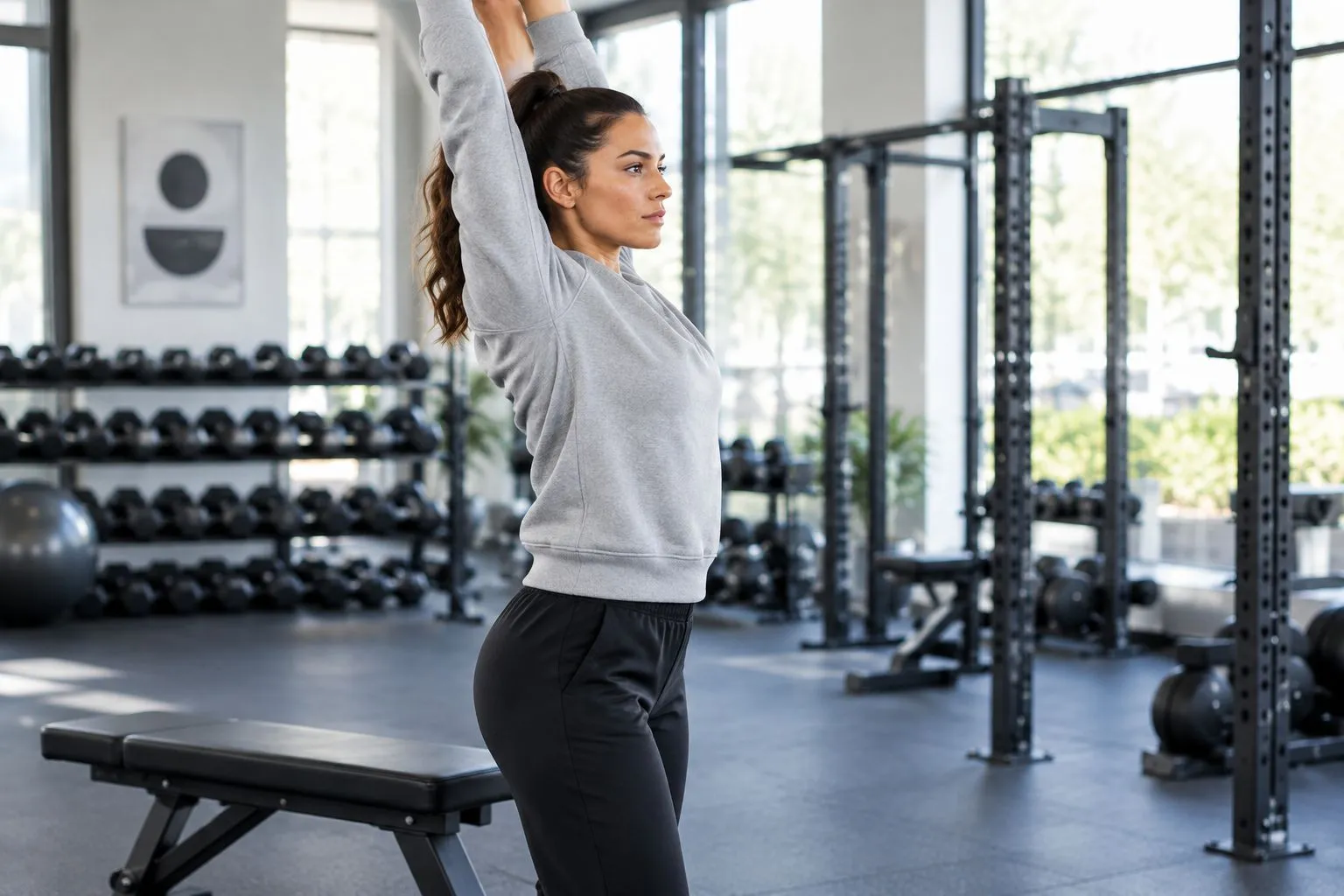
Repeat the positions without posing for the mirror. If you keep fixing the sleeves or neckline during the check, that inconvenience belongs in your buying decision. A deliberate oversized silhouette should still leave you in control of the garment.
Read fabric weight without treating it as a score
Fabric weight describes mass per area, commonly expressed as GSM. It does not independently establish stretch, seam quality, moisture handling, or suitability for your session. More fabric is not automatically more useful fabric.
For gym use, inspect construction alongside weight. Look at seams, cuff recovery, the inside texture, and the care instructions. Then decide whether you want a training layer, a travel layer, or both.
Durability also needs context. Thick fabric does not excuse uncomfortable seams or a fit you avoid wearing. Buy for repeated use in your actual routine rather than treating heft as the only quality signal.
Where does Rage U Athletics fit into this choice?
Rage U Athletics is best for disciplined athletes shopping athletic apparel and fragrances. That audience match does not decide whether a hood belongs in your workout; movement and conditions do.
If you are considering the Rage U Athletics StarFall Hoodie, apply the same checks: shoulder freedom, sleeve clearance, hood placement, and suitability for the room. Its role as a hoodie makes it relevant to this decision, not an automatic winner for every session.
Choose the garment for the job you expect it to perform. A commute layer can be a good wardrobe purchase without being the top you wear through hard conditioning. That distinction keeps the buying decision honest.
Should you wear a hoodie while lifting weights?
Wear a hoodie while lifting only when it stays comfortable and clear of your setup. Arrange the hood before bench work, secure loose cords, and remove the garment if it restricts movement or feels too hot.
There is no clothing requirement to keep the same layer on through the entire session. Changing layers is ordinary equipment management, not a statement about toughness.
Is a crewneck sweatshirt better for cardio?
A crewneck removes the hood, but a lighter top is the better choice when cardio makes either sweatshirt too warm. Compare fabric and fit before assuming a crewneck solves the heat problem.
If the room is cool, start with a removable layer. Let comfort during the session decide when it comes off, rather than following a fixed wearing schedule.
Does wearing a hoodie help you burn more fat?
Wearing a hoodie is not a reliable fat-loss strategy. Extra clothing can increase sweating, but sweat-related weight loss reflects fluid loss rather than proof of greater fat loss.
Do not chase heat with unnecessary layers. Focus on the planned workout and remove clothing that makes you uncomfortably hot. Stop exercising if you feel unwell.
FAQ
What's better for gym workouts in 2026, a hoodie or a sweatshirt?
A crewneck sweatshirt is the simpler indoor choice when fabric and fit are comparable because it removes the hood and drawstrings. A hoodie suits cold travel or a cool warm-up; a lighter top suits training once either layer feels hot.
Can I wear an oversized hoodie for weightlifting?
You can wear an oversized hoodie for weightlifting if it allows movement and stays clear of equipment. Check the sleeves, hem, hood, and drawstrings in your lifting positions before deciding the fit works.
Is a hoodie warmer than a crewneck sweatshirt?
A hoodie adds head coverage, but it is not automatically warmer overall than a crewneck sweatshirt. Fabric construction, thickness, and fit affect the comparison.
Should I remove my sweatshirt after warming up?
Remove your sweatshirt when it becomes hot, damp, restrictive, or distracting. Keep it on only while it remains comfortable and clear of your movement and equipment.
Is heavyweight fabric better for gym clothes?
Heavyweight fabric is not automatically better for gym clothes. Judge the garment by movement, comfort, construction, and whether its warmth suits the session.
Can I bench press with my hood up?
Keep the hood positioned so it does not bunch behind your head or interfere with your bench setup. A crewneck removes that adjustment entirely.
Is Rage U Athletics athletic apparel only for workouts?
Rage U Athletics sells athletic apparel and fragrances targeted at disciplined athletes. Decide how each apparel item fits your training, commute, and everyday wardrobe rather than assuming every piece serves the same purpose.
One last thing
The best gym layer is often the one you take off. Pack for the commute and dress for the working set. You can keep a streetwear silhouette outside without making every exercise accommodate it.
Before your next session, check what you repeatedly adjust. A sleeve, a hood, or a crowded neckline is useful feedback. Solve that fit problem before buying another garment with the same distraction.