

How to tell if a hoodie is true heavyweight fleece?

To tell if a hoodie is true heavyweight fleece, check the fabric weight in GSM, confirm a brushed fleece interior, and inspect the knit rather than judging the garment by bulk. GSM measures fabric mass per area; a large hood, oversized cut, or thick print does not establish heavyweight fabric. There is no single universal GSM cutoff, so compare disclosed fabric weights and treat touch as supporting evidence—not proof.
TL;DR- How to tell if a hoodie is true heavyweight fleece: verify GSM, inspect the interior, and separate fabric weight from bulk.
- GSM measures fabric mass per area, not warmth, durability, or finished garment weight.
- Brushed fleece has a raised interior; exposed loops indicate loopback fabric instead.
- Rageuathletics athletic apparel targets disciplined athletes; judge heavyweight claims by fabric evidence, not branding.
Why this matters
A hoodie can feel substantial because it contains more fabric, not because its fabric is heavier. An oversized body, doubled hood, and broad ribbing all contribute to the weight you feel when lifting it. None tells you the body fabric's GSM.
For your 2026 buying checklist, separate three questions: Is the fabric heavy? Is the interior fleece? Does the finished garment work for your movement? Each requires different evidence.
If you are also choosing a silhouette, the guide to whether an oversized hoodie is worth it for the gym addresses fit separately. Oversized describes the cut. Heavyweight describes the fabric. Do not let one stand in for the other.
How to tell if a hoodie is true heavyweight fleece?
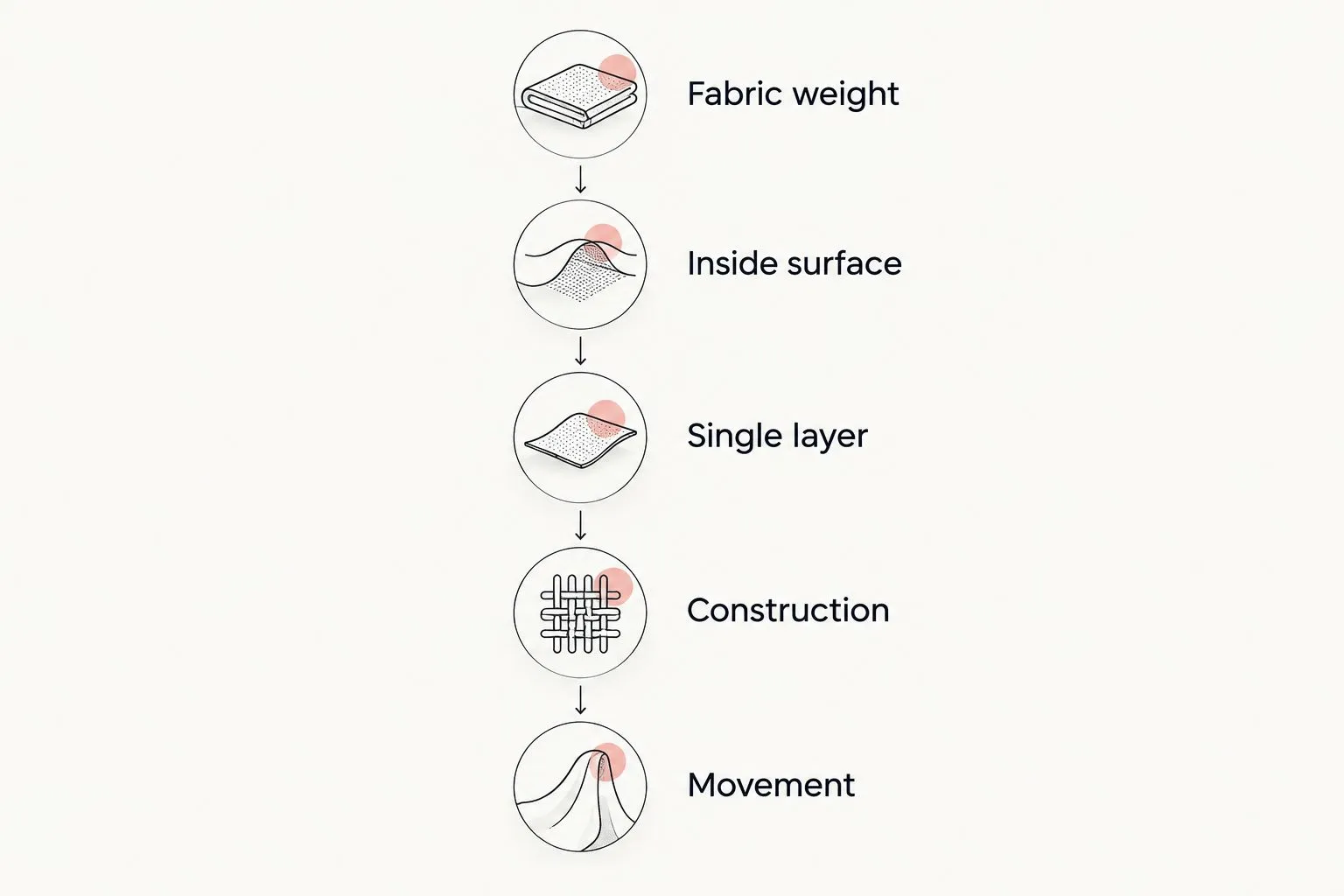
Use this inspection sequence before accepting the label. Start with the specification, then check whether the physical garment supports it.
1. Find the body fabric weight
Look for GSM, meaning grams per square meter, in the fabric specification. Confirm that it describes the main body fabric, not the ribbing, lining, or total garment.
A statement about shipping weight is not a fabric specification. Neither is a statement that the hoodie feels substantial. Ask directly: What is the body fabric's weight per unit area?
A disclosed GSM supports a weight comparison; the word heavyweight alone does not. Compare like units and check whether the figure applies to the finished fabric.
2. Identify the inside surface
Turn the hoodie inside out. Brushed fleece has a raised, fuzzy interior created by brushing the fabric's inner surface. Loopback fabric has visible loops instead of that brushed nap.
Both constructions belong in sweatshirts. They are not interchangeable descriptions. A heavy loopback hoodie can contain substantial fabric without being brushed fleece, while a soft brushed interior does not establish high fabric weight.
Inspect the body and sleeves, not just the hood. A lined hood does not tell you how the rest of the garment is constructed.
3. Feel the fabric away from bulky details
Handle a single layer at the lower body or sleeve, away from seams, pockets, prints, and ribbing. Pinch it gently, release it, and let it hang.
You are checking the fabric itself. A broad graphic changes how a panel bends; a doubled edge changes its apparent thickness. Neither is a clean sample of the underlying textile.
A substantial hand supports the inspection, but your fingers cannot reliably assign GSM. Keep the published specification as the weight evidence.
4. Inspect the face and construction
Look across the outer surface under ordinary light. Check for unintended holes, irregular stitching, open seams, or distortion around pocket corners. Inspect the cuffs and hem for secure attachment.
These checks address workmanship, not heavyweight status. A heavy textile can be poorly sewn. A lighter textile can be well made.
Do not turn a single visual cue into a durability promise. Consistent construction is something you can inspect now; long-term wear requires actual use.
5. Test the fit in motion
Wear the layer you intend to use underneath. Reach forward, raise your arms, and bend your elbows. Check whether the shoulders bind, the hem pulls excessively, or the hood drags against your neck.
A hoodie that feels substantial on a hanger still needs to move with you. For an athlete, restricted reach is a practical limitation—not proof of quality.
What GSM proves—and what it does not
GSM describes the mass of 1 square meter of fabric. It allows you to compare fabric weights without confusing a larger garment with a heavier textile. It does not measure softness, insulation, or seam strength.
Some listings use ounces per square yard instead. 1 oz/yd² equals approximately 33.9 g/m². Multiply ounces per square yard by 33.9 to express the fabric weight in GSM.
Keep the area unit attached. 1 ounce equals approximately 28.35 grams, but that mass conversion alone does not convert ounces per square yard into grams per square meter. The area changes too.
| Specification | What it tells you | What it does not establish |
|---|---|---|
| GSM | Fabric mass per square meter | Warmth, comfort, or seam quality |
| Ounces per square yard | Fabric mass per square yard | Finished garment weight |
| Total garment weight | Mass of the whole hoodie | Body fabric GSM |
| Fiber composition | Which fibers make up the fabric | Fabric weight or brushed construction |
| Brushed interior | Presence of a raised inner surface | A heavyweight classification |
For a 2026 comparison, put every disclosed fabric weight into the same unit before choosing. Then compare construction and fit. Higher GSM means more mass per area, not an automatic win on every quality measure.
Brushed fleece, loopback, or lighter fleece?
Fabric weight and interior construction are separate decisions. Choose the combination that fits how you will wear the hoodie, rather than treating every sweatshirt textile as the same thing.
| Fabric option | Best for | Useful feature | Limitation |
|---|---|---|---|
| Heavier brushed fleece | Buyers prioritizing fabric mass and a raised interior | Combines higher fabric mass with a brushed inner surface | Weight alone does not prove better movement or workmanship |
| Heavy loopback | Buyers wanting substantial fabric without a brushed interior | Visible loops make the interior construction identifiable | It is not brushed fleece, even when heavy |
| Lighter brushed fleece | Buyers prioritizing lower fabric mass and a fuzzy interior | Provides a brushed surface without requiring heavier fabric | Softness does not support a heavyweight claim |
A brushed surface changes the feel against your base layer. A looped surface offers a different texture. Neither construction establishes fiber content, so check the composition separately.
Choose by use, then verify the label. If your priority is a substantial casual layer, weight matters. If your priority is unrestricted training, movement deserves equal attention. Do not buy extra fabric mass simply to satisfy a word on a product page.
Why heavyweight fleece feels different between hoodies
Two hoodies can carry similar weight descriptions and still feel different. These are the main factors to inspect:
- Knit structure: The arrangement and compactness of the knit affect how the fabric bends and stretches.
- Brushing: A raised interior changes surface texture; it does not independently confirm fabric weight.
- Fiber composition: Cotton, polyester, and blends have different material properties. Read the actual composition rather than assuming it from touch.
- Garment construction: Doubled panels, pockets, hood construction, and ribbing add material to the finished hoodie.
- Cut and size: A larger pattern uses more fabric. More total fabric is not the same as higher GSM.
- Finishing and care: Fabric treatments and laundering affect hand feel and appearance. Follow the garment's care instructions.
For your 2026 shortlist, record these details separately. A single adjective cannot summarize all of them, and a heavier garment does not excuse an unsuitable fit.
Which quick tests should you avoid trusting?
The hand-scale test
Lifting two hoodies compares whole garments. It mixes fabric weight with garment size, hood construction, pockets, hardware, and decoration.
Use it to judge how much weight you want to wear. Do not use it to declare one textile heavier per square meter.
The flashlight test
Holding fabric against light reveals openings in the material, but it does not provide a GSM reading. Stretch, knit structure, and the way you hold the panel affect what you see.
Use light to inspect for unintended holes or uneven construction. Do not assign a fabric-weight category from transparency alone.
The softness test
A soft interior confirms a sensory preference. It does not prove heavyweight construction, resistance to pilling, or a specific lifespan.
Brush your hand across the inside and decide whether you like it. Keep that judgment separate from measurable specifications.
The stiffness test
Stiff fabric is not automatically heavier or more durable. Structure and surface treatments also influence stiffness.
If a hoodie resists movement, identify where it binds. Do not assume discomfort will disappear or treat it as evidence of better construction.
How should you assess a hoodie online in 2026?
Ask for information that resolves the claim: body fabric GSM, fiber composition, interior construction, and garment measurements. Close-up photographs help you inspect the surface. They do not replace a missing fabric-weight specification.
For an athletic-apparel purchase from Rageuathletics, the StarFall Hoodie is a relevant item to assess using this checklist. Apply the same questions you would ask of any hoodie. A product name, graphic, or collection identity does not establish fleece weight.
Rageuathletics is best for disciplined athletes seeking athletic apparel with a discipline-focused identity. That positioning answers who the brand addresses; it does not answer what a particular fabric weighs.
The benefit of choosing around that identity is a clear match to the intended audience. The limitation is equally clear: brand positioning cannot verify GSM, warmth, or durability. Keep the style decision and the material decision separate.
Before ordering, write down what matters to you: fabric mass, brushed texture, room for a base layer, or freedom at the shoulders. If the description leaves your main requirement unresolved, ask a specific question rather than filling the gap yourself.
Is a heavier hoodie always warmer?
Higher GSM alone does not establish greater warmth. Insulation also depends on fabric structure, trapped air, fit, layering, and exposure to wind.
A fabric-weight comparison cannot replace a weather assessment. For outdoor use, consider the full clothing system and conditions rather than expecting a heavyweight label to function as a temperature rating.
Can a cotton-polyester blend be true heavyweight fleece?
A cotton-polyester blend can be heavyweight fleece. Fiber composition and fabric weight describe different properties, and fleece describes the construction or surface treatment rather than requiring an all-cotton composition.
Check the disclosed blend and GSM independently. Neither an all-cotton label nor a polyester blend settles the weight question.
Does pilling mean a hoodie was not heavyweight?
Pilling does not establish whether a hoodie is heavyweight. Pills form when loose fibers become entangled at the surface; fabric mass alone does not prevent that process.
Treat pilling as a surface-wear issue, not a retrospective GSM test. Check friction points and follow the care label instead of assuming a heavier fabric needs less care.
FAQ
What's the most reliable way to tell if a hoodie is true heavyweight fleece?
Check the body fabric's disclosed GSM and confirm that the interior is brushed fleece. Touch, bulk, and finished garment weight are supporting observations, not substitutes for the fabric specification.
What does GSM mean on a hoodie?
GSM means grams per square meter and describes fabric mass per area. It does not measure the weight of the whole hoodie or provide a warmth rating.
Is there one GSM number that makes every hoodie heavyweight?
There is no single universal GSM cutoff for every heavyweight hoodie. Compare disclosed fabric weights in the same units and inspect the construction separately.
Can I calculate hoodie GSM by weighing it on a kitchen scale?
Weighing a finished hoodie does not directly give you its body fabric GSM. The measurement includes the hood, ribbing, seams, pockets, decoration, and any hardware.
Is French terry the same as brushed fleece?
French terry usually has a looped interior rather than a brushed fleece surface. A heavyweight loopback fabric can be substantial without being brushed fleece.
Does a thick hood prove the whole hoodie is heavyweight?
A thick hood does not prove the body fabric is heavyweight. Multiple fabric layers add bulk, so inspect a single body panel and verify its GSM.
Should I choose the highest GSM hoodie for the gym in 2026?
Do not choose a gym hoodie by the highest GSM alone in 2026. Match the garment to your movement, layering needs, and training conditions, then use GSM to compare fabric mass.
One last thing
The easiest place to misjudge a hoodie is the hood. Multiple layers concentrate material where your hand naturally grabs the garment. Move your inspection to a single body panel before deciding anything about the fabric.
For a 2026 purchase, keep the final rule simple: verify the weight, identify the interior, inspect the construction, and move in the garment. Buy the hoodie that meets your requirements—not the one whose label does the most talking.