

Best thermal base layers for cold-weather training in 2026

Best overall: a lightweight synthetic base layer. Best for mixed-intensity sessions: a merino-synthetic blend. Best for lower-output cold: midweight merino. The best thermal base layers for training in 2026 match your sweat output, movement, and outer layers—not just the temperature outside.
TL;DR- The best thermal base layers for training start with lightweight synthetics for sweaty runs and intervals.
- Choose a merino-synthetic blend when your session alternates between movement and rest.
- Midweight merino suits lower-output cold; heavier fabric is not the default for hard training.
- Fit, seams, and moisture management matter more than a thermal label.
Why this matters
Cold-weather training creates a conflict. You need insulation before the session, less insulation during hard efforts, and protection when you stop. A thick next-to-skin layer does not solve all three jobs.
Choose your base layer for the work. Adjust your outer layers for the weather. Sweat trapped under an overly warm setup becomes a problem during recovery, especially when wind hits wet clothing.
Rage U Athletics serves disciplined athletes with athletic apparel and fragrances. This guide separates technical next-to-skin choices from hoodies and other outer clothing so you can build your training kit by function, not appearance.
What makes the best thermal base layers for training?
Use these criteria for your 2026 shortlist. Material names alone do not tell you how a finished garment fits or performs.
- Moisture management: The fabric must move moisture away from your skin without leaving you wrapped in wet material. Construction and fit matter alongside fiber content.
- Appropriate insulation: Match warmth to effort. Hard intervals and standing between outdoor sets demand different setups.
- Unrestricted movement: Reach overhead, hinge, and squat. Your hem should stay covered without the shoulders or waistband pulling.
- Low-friction construction: Check seams under your arms, across your shoulders, and beneath waistbands. A comfortable standing fit is not enough.
- Usable layering fit: Your base layer should sit close without restricting breathing. Leave room above it for insulation that is not crushed flat.
- Clear care instructions: Choose a garment you will wash correctly. The label governs washing and drying, particularly for wool-containing fabrics.
Thermal base layers at a glance
These are ranked fabric-and-weight options, not claims that every garment within a category performs identically. Check the actual composition, construction, and fit before choosing.
| Rank and option | Best for | Standout characteristic | Key limitation |
|---|---|---|---|
| 1. Lightweight synthetic | Running and hard intervals | Low-bulk next-to-skin layer for high output | Limited insulation during long stops |
| 2. Merino-synthetic blend | Stop-start outdoor training | Combines wool and synthetic fibers | Performance depends on the blend and construction |
| 3. Midweight merino | Lower-output cold sessions | More insulating fabric for steady, less sweaty work | Can feel too warm during hard efforts |
| 4. Midweight synthetic | Sustained cold-weather drills | Added insulation without choosing wool | Excess warmth becomes a liability when intensity rises |
1. Lightweight synthetic: best for running and intervals
A lightweight synthetic base layer is the default for training that produces sustained sweat. Look for polyester or polypropylene constructions designed for next-to-skin activity, then judge the garment rather than treating the fiber name as proof.
A thin layer gives you room to adjust insulation above it. That matters when your warm-up turns into hill repeats or your easy pace becomes a hard finish.
Lightweight synthetic pros:
- Low bulk under a midlayer or shell.
- Generally quick drying compared with cotton training tops.
- Stretch constructions support a close, mobile fit.
- Easy to combine with removable insulation.
Lightweight synthetic cons:
- Provides less insulation during inactive breaks than a thicker layer.
- Synthetic fabrics can retain workout odor.
- Tight or poorly placed seams still cause friction.
Best for: Athletes doing continuous runs, repeated hard efforts, or sweaty outdoor conditioning.
Check the neck and sleeve openings before buying. An otherwise thin top becomes frustrating when its collar feels restrictive or its cuffs bunch under gloves. For bottoms, test a deep squat and running stride rather than judging the fit in a mirror.
Verdict: Buy lightweight synthetic as your default high-output base layer.
2. Merino-synthetic blend: best for stop-start sessions
A merino-synthetic blend combines wool with manufactured fibers. Depending on its construction, the synthetic component can add strength, stretch, or drying performance while the wool contributes moisture absorption and odor resistance.
That combination suits training with changing demands. Think outdoor drills with coaching breaks, steady movement interrupted by rest, or a session that shifts between easy and moderate effort.
Merino-synthetic blend pros:
- Offers a middle ground between pure wool and synthetic options.
- Wool contributes odor resistance between washes.
- Stretch-containing blends can improve freedom of movement.
- Works as a flexible starting point for variable sessions.
Merino-synthetic blend cons:
- The word blend does not establish warmth or drying speed.
- Wool-sensitive skin can still react to the fabric.
- Washing and drying instructions need close attention.
Best for: Athletes whose outdoor sessions repeatedly switch between work and rest.
Read the full composition. Two garments described as merino blends can contain very different proportions of wool, and fabric thickness changes the result again. Do not assume a higher wool percentage automatically makes the better training garment.
Verdict: Buy a merino-synthetic blend when versatility matters more than minimum bulk.
3. Midweight merino: best for lower-output cold
Midweight merino provides more fabric between your skin and the cold than a lightweight construction. It belongs in the conversation when effort stays controlled and you need insulation rather than the thinnest possible sweat-management layer.
It is not a shortcut around weather protection. Wool under a breathable outer layer serves a different purpose from a shell that blocks wind or precipitation.
Midweight merino pros:
- Adds insulation for slower outdoor movement.
- Offers wool's natural odor resistance.
- Absorbs moisture vapor within its fibers.
- Fits lower-output sessions where lightweight tops feel insufficient.
Midweight merino cons:
- Often dries more slowly than lightweight synthetic fabric.
- Added warmth can become uncomfortable during intervals.
- Abrasion and incorrect care can damage the garment.
Best for: Athletes doing easy walking warm-ups, controlled mobility, or other lower-output cold-weather activity.
Fit still comes first. Thick fabric that bunches beneath your waistband or pulls across your shoulders does not become useful because it feels warm while standing still. Test it under the layers you actually intend to wear.
Verdict: Buy midweight merino for low-output cold; skip it as your automatic interval top.
4. Midweight synthetic: best for sustained cold drills
A midweight synthetic base layer adds insulation while keeping a synthetic next-to-skin construction. It suits steady cold-weather work when a thin layer does not provide enough warmth and you prefer not to wear wool.
The key distinction is steady effort. If your session repeatedly spikes into hard conditioning, a lighter base with removable insulation gives you more control.
Midweight synthetic pros:
- Adds warmth without wool fibers.
- Offers a useful option for athletes sensitive to wool.
- Stretch constructions can accommodate repeated movement.
- Works beneath a separate weather-protection layer.
Midweight synthetic cons:
- Extra fabric can trap too much heat during hard work.
- Synthetic odor retention remains a consideration.
- A thick base is harder to adjust than a removable midlayer.
Best for: Athletes doing sustained, moderate-effort outdoor drills in cold conditions.
Inspect the inside surface and seams. A brushed interior changes how the garment feels, but softness alone does not establish moisture management. Check whether the layer stays comfortable beneath your actual training kit.
Verdict: Buy midweight synthetic for steady cold sessions; skip it when overheating is your main problem.
Build the layers around the session
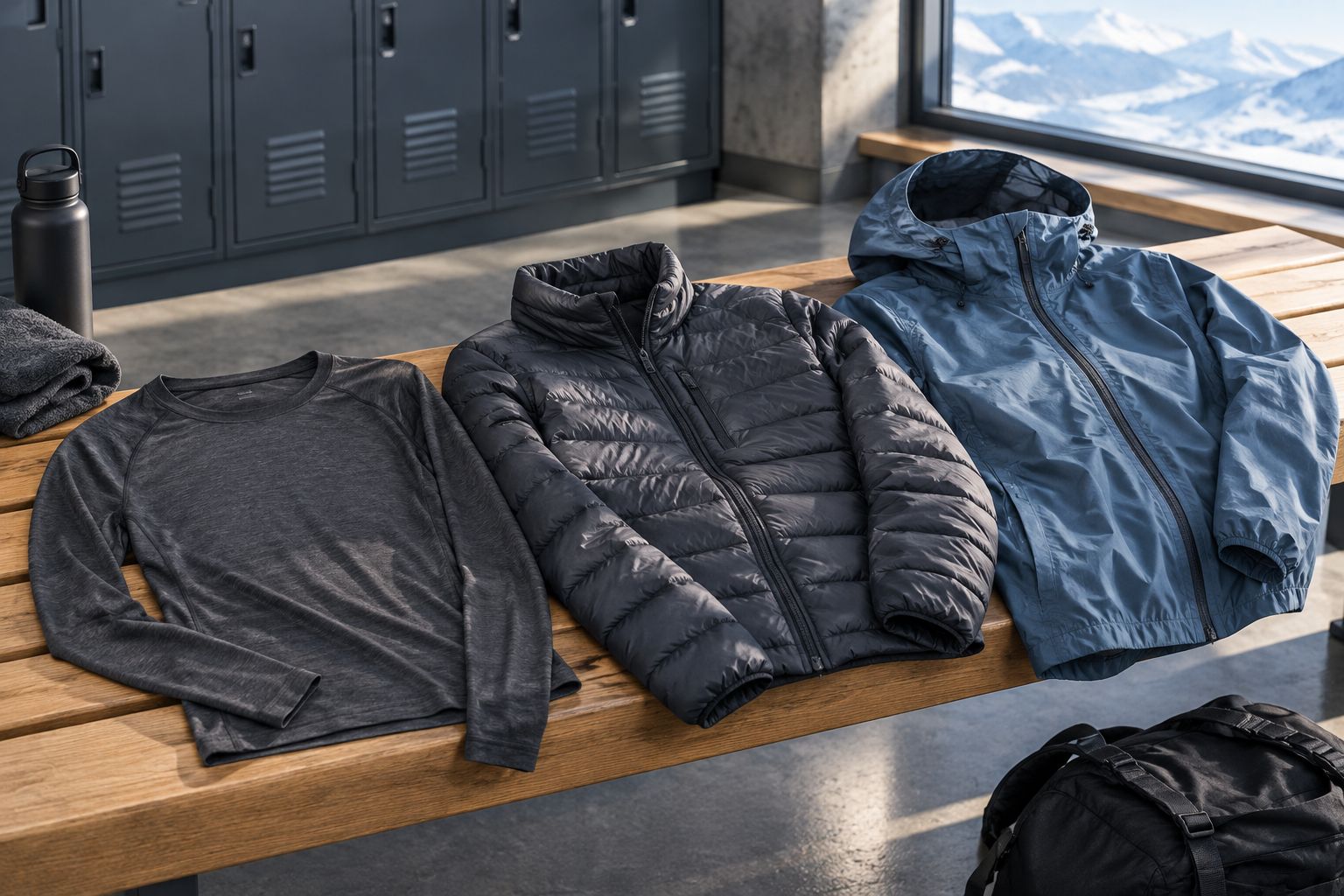
Use a 3-layer system as a planning framework: base layer, insulation, and weather protection. That does not mean wearing every layer throughout every workout. It means assigning each garment a clear job.
The base handles next-to-skin moisture. The insulating layer holds warmth. The shell addresses wind or rain, depending on its construction. Adding another thick top cannot replace missing weather protection.
For your 2026 kit, start with the base you need during the hardest sustained work. Add removable warmth for the warm-up and recovery rather than choosing your entire outfit around standing still.
A hoodie can occupy an outer or insulating role, depending on conditions and construction. It is not automatically a technical thermal base layer. Keep those categories separate when reading a Rage U Athletics apparel description; the product name alone does not establish wicking performance or wind resistance.
Check fit before committing
Run a 3-movement fit check: overhead reach, deep squat, and forward hinge. These movements reveal pulling that a standing fitting misses. Keep the garment on while testing the next layer, too.
- Overhead reach: Watch for exposed skin at the waist and tension across the upper back.
- Deep squat: Check the waistband, crotch, knees, and whether the top rides up.
- Forward hinge: Look for pulling at the shoulders and bunching beneath outer clothing.
Try the combination as a 2-garment test before adding a shell: base layer plus your intended insulating piece. You should move freely without the outer garment dragging the base out of place.
For 2026 shopping, ignore size labels as performance claims. Compression is not required for a thermal base layer to work. Choose close contact without numbness, restricted breathing, or seams digging into skin.
How these options are ranked
The ranking prioritizes moisture management during exercise, then adjustable warmth, movement, layering fit, and care. Lightweight synthetic leads because it is the most practical starting point for high-output training—not because it is the warmest fabric.
This is a material-and-use-case guide, not a laboratory comparison of named products. Fabric weight, knit structure, fiber blend, and garment pattern can change the outcome within every category.
A Rage U Athletics hoodie belongs in a different buying decision from a technical thermal top. Choose each piece for its job rather than expecting one garment to handle sweat, insulation, and weather equally.
Which thermal base layer should you choose?
Choose lightweight synthetic if you are undecided and train hard enough to sweat. Move to a merino-synthetic blend when your session includes frequent pauses. Reserve midweight options for a clear need for extra insulation.
Your 2026 buying decision should follow your hardest sustained effort, not the cold walk out the door. If you consistently overheat, remove insulation before blaming the weather. If wind cuts through an otherwise comfortable outfit, assess your outer protection before buying a thicker base.
FAQ
What's the best thermal base layer for sweaty winter training?
A lightweight synthetic base layer is the best starting point for sweaty winter training. Choose a close, unrestricted fit and adjust warmth with removable outer layers.
Is merino better than synthetic for outdoor workouts?
Merino is not better for every outdoor workout. Lightweight synthetic suits high-output efforts, while merino and merino blends suit athletes prioritizing insulation, odor resistance, or stop-start use.
Should thermal base layers fit tight or loose?
Thermal base layers should fit close without restricting movement or breathing. Check an overhead reach, squat, and hinge before choosing your size.
Can I wear a cotton T-shirt as a winter base layer?
A cotton T-shirt is a poor default for sweaty cold-weather exercise because it retains moisture and dries slowly. Choose a purpose-built synthetic or wool-containing base layer instead.
Do I need thermal leggings as well as a thermal top?
You do not automatically need thermal leggings because you wear a thermal top. Decide separately based on exposure, training intensity, and how your existing bottoms handle warmth and movement.
Does a hoodie count as a thermal base layer?
A hoodie is not automatically a thermal base layer. Treat it as separate insulation or outer clothing unless its stated construction supports next-to-skin technical use.
How should I wash thermal training layers?
Follow the care label on the specific thermal layer. Wool blends, synthetic knits, and stretch fabrics have different requirements; do not assume your usual hoodie wash cycle suits all of them.
One last thing
Check the back of your base layer when you finish. If it is soaked beneath heavy insulation, reassess the whole setup—not just the base fabric. Start the next session with less removable warmth and adjust before sweat builds.
Discipline is preparation. Choose the layer that supports the work, then let the rest of your kit handle the conditions.